


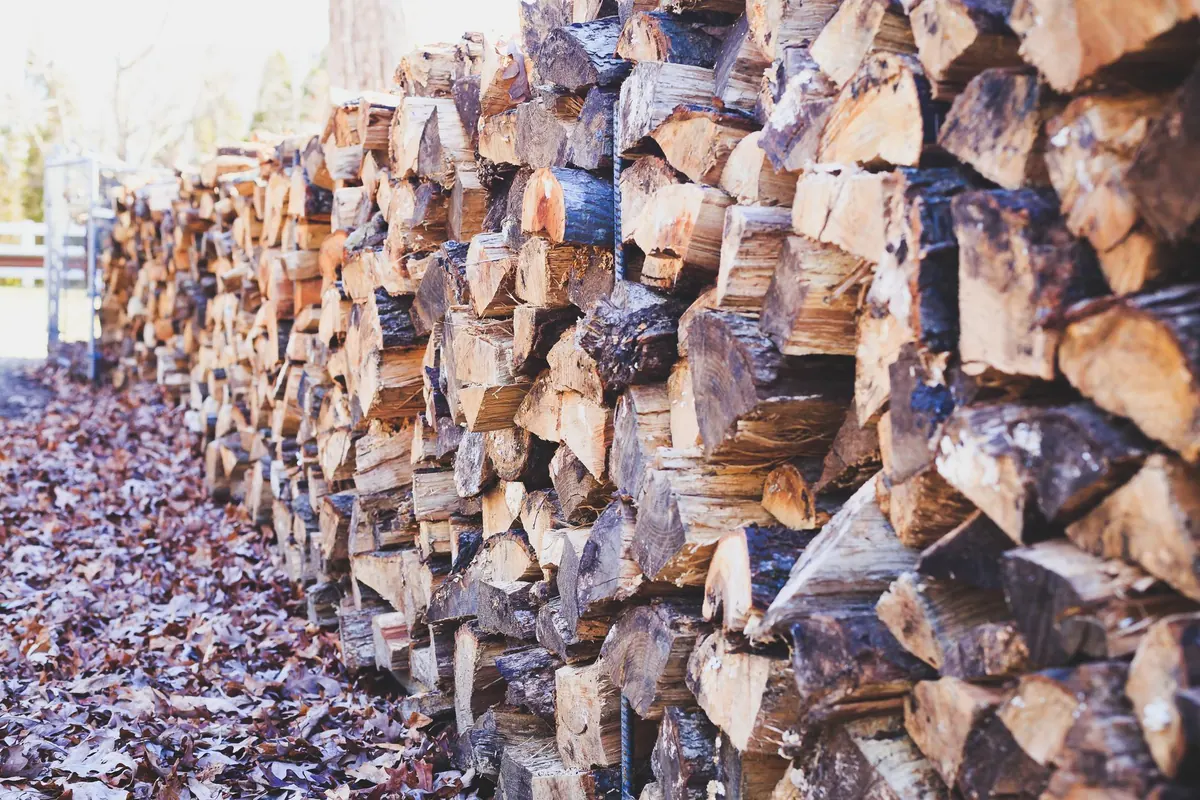


There is a particular satisfaction in a fire that lights easily, burns hot and leaves little more than a soft dusting of ash in the grate. It rarely happens by accident. More often, it is the reward for firewood that was cut, split and stored with a bit of patience months earlier. Get that part right and everything else — the smoke, the smell, the struggle with damp kindling — tends to fall into place.
British weather makes this trickier than it sounds. Weeks of drizzle, sudden mild spells and a damp autumn can undo months of good intentions if logs are left exposed or packed too tightly. The good news is that seasoning firewood is not complicated. It simply asks for air, time and a sensible spot to stack.
Why Seasoning Matters More Than You Might Think
Freshly felled wood is roughly half water by weight. Burn it too soon and much of the heat you paid for goes into boiling that moisture off rather than warming the room. The fire hisses, the glass on a stove blackens, and the chimney collects tar — the sticky, flammable residue that sweeps warn about. Green wood also smokes heavily, which is unpleasant in a living room and a nuisance for neighbours.
Seasoned wood is different. Once moisture content drops to around 20 per cent or lower, logs ignite readily, burn steadily and give off far less smoke. The aim of everything that follows is simply to get your wood to that point and keep it there.
Choose the Right Wood in the First Place
Hardwoods such as ash, oak, beech, birch and hawthorn are the traditional favourites because they are dense and burn long. Ash has a reputation for seasoning quickly and can often be burned sooner than other hardwoods. Softwoods like pine and spruce light easily and throw out good heat, though they burn faster and are best kept for kindling or mixed loads.
Whatever you buy or gather, ask how it has been stored. Logs sold as "seasoned" are not always ready, and kiln-dried wood is worth considering if you need something to burn now. If you are buying in bulk, a moisture meter costs little and takes the guesswork out of the whole process.
Split, Stack and Let the Air Do the Work
Splitting is the single biggest favour you can do your woodpile. Whole rounds dry painfully slowly because bark seals in moisture, but split logs expose far more surface area to moving air. Cut lengths to suit your stove or grate — usually around 25 to 30 centimetres — and split anything thicker than your forearm.
Then stack with airflow in mind:
- Lift the pile off the ground using pallets, bricks or a purpose-built rack. Ground contact draws damp upward.
- Leave gaps between logs. A loose stack dries faster than a tidy wall of timber, even if it looks less neat.
- Stack in a single row if you have the space. One log deep dries far better than a deep cube.
- Face the stack into the prevailing wind so air moves through the gaps rather than around them.
- Keep it in full sun where possible. Warmth drives moisture out; shade slows everything down.
Bark up or bark down matters less than airflow, though many people stack bark-side up so rain runs off. During summer, leave the top open to the sun and let any rain that falls evaporate quickly. From around October, cover the top with a weighted tarpaulin or a sheet of corrugated iron, but leave the sides open. Wrapping a stack completely traps moisture and defeats the whole exercise.
How Long Does It Take?
In a typical UK climate, most hardwoods need at least a year, and dense species such as oak are better left for two. Softwoods may be ready in six to nine months. Wet summers stretch these times; a hot, breezy July can shave weeks off. Judge by feel and sound rather than the calendar — dry logs are noticeably lighter, have loose or cracked bark, and ring sharply when knocked together. A dull thud usually means more time is needed.
Where to Store Firewood Through the Winter
Once logs are seasoned, the goal shifts from drying to keeping them dry. A covered log store with open sides is ideal, positioned where wind can still reach it. If you store logs against a house wall, leave a gap so damp cannot wick across, and avoid stacking directly against timber cladding or painted surfaces.
Bring only a few days' worth indoors at a time. A small basket beside the hearth is fine, but a large indoor pile draws insects out of dormancy, adds moisture to the room and creates a clutter hazard near the fire. If you keep a bigger reserve in a garage or shed, make sure it has ventilation — a sealed concrete outbuilding can be surprisingly humid.
Watch for mould, white fungal threads or a musty smell; these all point to wood that has been stored too wet. It is not worth burning. Compost it or set it aside to dry again, and rearrange the rest of the stack to improve airflow.
Finally, if you live in a smoke control area, check what you are permitted to burn. Many urban areas restrict the use of house coal and wet wood, and your local council can confirm the rules that apply to your address.
A Simple Routine That Works
Cut and split in spring, stack loosely in sun and wind, cover the top from autumn, and test a split log before you rely on the pile. Bring in small amounts as you need them, and keep the next season's wood quietly seasoning in the background while this year's burns. Do that, and a clean, warm fire becomes something you can count on rather than something you coax.
Photo: Michael Morse / Pexels