

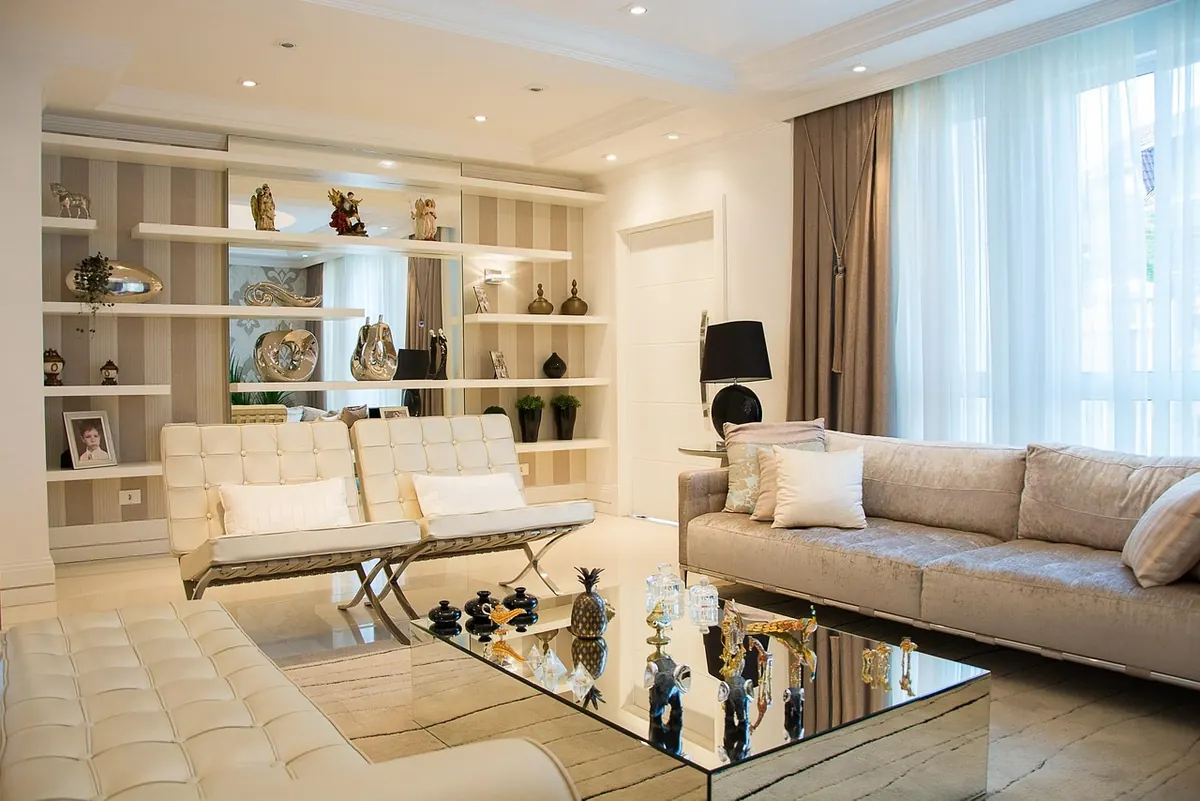

A small living room asks a lot of you. It has to hold the sofa, the television, the books, the guests and the Sunday afternoon nap, and still feel like somewhere you would choose to sit. The usual advice — paint everything white and push the furniture against the walls — tends to produce a room that reads as airy but feels about as inviting as a waiting room.
You can have both. Treat light, colour and reflection as your tools for space, and texture, warmth and layers as your tools for comfort. Get the balance right and a room of three by four metres can feel calm, roomy and genuinely snug.
Choose a Base Colour That Suits Your Light
Before you choose a colour, sit in the room at three points in the day and watch where the light falls. North-facing rooms get cool, flat light for most of the day, so warm neutrals — oatmeal, clay, soft biscuit, a grey with brown in it — stop them feeling chilly. South-facing rooms can carry cooler greys and gentle blues without turning cold.
Very few small rooms benefit from stark white. Brilliant white walls in poor light look grey and shadowy, and a bright white ceiling draws the eye up to a space that is not very tall. Keep the ceiling the same colour as the walls, or half a shade lighter, and take the wall colour onto the skirting boards and window reveals. When the join between wall and floor disappears, the eye has less to measure.
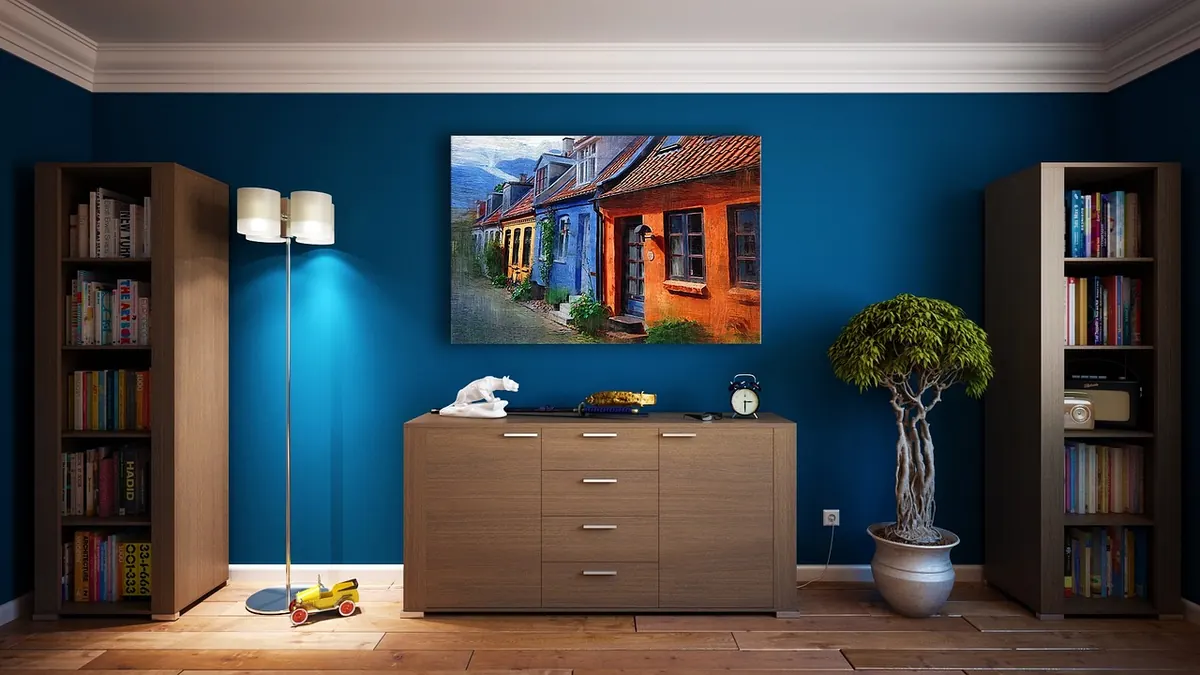
If you want one dark wall
A deep colour behind the sofa makes a room feel deeper and considerably cosier, because it pulls that wall towards you rather than letting it recede. The other three walls and the ceiling need to stay light, and the room needs a mirror or a good window so the dark end does not become a tunnel.
Let the Furniture Float a Little
Pushing every piece against the wall leaves a strip of empty floor down the middle, which underlines exactly how narrow the room is. Pull the sofa fifteen to twenty centimetres away from the wall, angle an armchair towards it rather than squaring it off, and let the rug hold the group together.
Rug size matters more than most people expect. One that stops short of the seating looks like a postage stamp and shrinks the room. Aim for a rug that sits under the front legs of the sofa and chairs, with a little bare floor visible around the edges.
- Pull seating away from the walls and define the group with a rug.
- Keep a clear, unobstructed route to the door.
- Choose one larger piece — a sofa, a rug or a mirror — and keep everything else quiet.
- Swap a bulky coffee table for two small tables you can move apart when guests arrive.
- Pick furniture with visible legs; seeing floor underneath makes a room read as bigger.
Use Mirrors Where They Work Hardest
A mirror earns its place by reflecting something worth looking at. Put a large one opposite or beside the window and it carries daylight across the room; hang it on a side wall and it echoes the length of the space. Facing a blank wall, it simply repeats the problem.
One generous mirror beats a cluster of small ones. Over the sofa, or leaning on a chimney breast, it opens up the wall without stealing floor space. A chunky frame adds warmth that frameless glass cannot, and hanging it around seated eye level means it reflects the room rather than the ceiling.
A mirror behind a table lamp doubles the light you already have. It is the cheapest extra lamp you will ever buy.
Check for glare before you commit. If the mirror bounces sun onto the television or straight into your eyes at six o'clock, shift it along the wall.
Light in Layers, Not in One Blast
A single ceiling light turned up high flattens a room: bright in the middle, dim in the corners, no sense of depth. Three layers work far better.
- Ambient: a ceiling fitting or a pair of wall lights on a dimmer, doing the broad work.
- Task: a floor lamp beside the reading chair, angled down over the page.
- Accent: a small table lamp or two, or an uplighter tucked behind a plant to wash the wall with light.
Choose warm bulbs rather than cool ones, and put dimmers on the main circuits so the room can shift from bright afternoon to soft evening without a hard line between the two. Let light land on walls and ceilings as well as floors; washing the vertical surfaces adds depth and makes the room feel taller.
Build Warmth With Texture
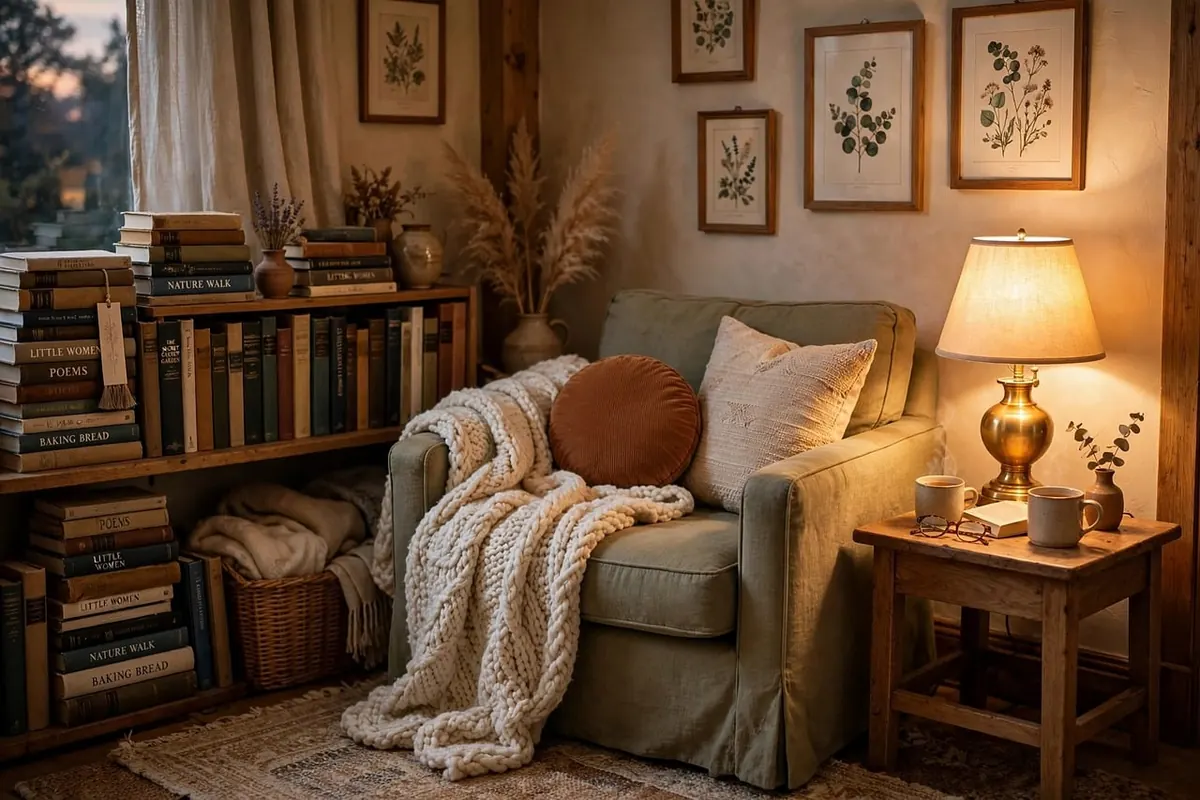
Cosiness comes from what you can touch. Two or three textures in the same colour family — a wool throw, a velvet cushion, a linen blind, a jute rug — give a small room richness without visual noise. A tight palette is what stops it tipping into clutter.
Curtains do a lot of quiet work. Hang the pole high and extend it well past the window on both sides, so the fabric covers wall rather than glass when the curtains are open. Floor-length curtains add height; a roman blind on its own can leave the top of a window looking apologetic.
Keep the surfaces calm
Every object on display takes up its share of the room's visual space. A basket beside the sofa for throws, a footstool with a
Photo: leemelina08 / Pixabay