

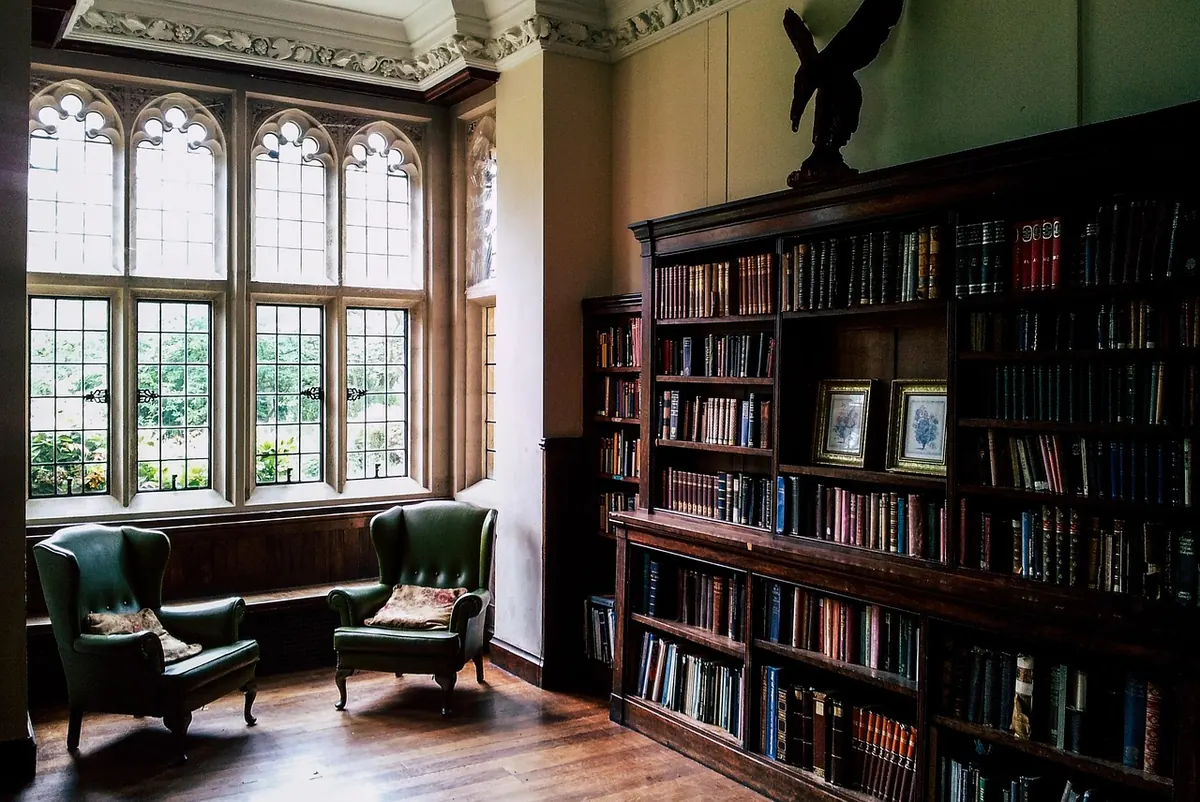
A Victorian terrace usually has a fireplace-shaped hole at its heart. Often it is literally a hole: the cast-iron insert was taken out decades ago, the opening boarded over, and a gas fire pushed in front of a flue nobody has swept since. What you still have — and what most new-builds lack — is the chimney breast, the alcoves either side, and a flue running the full height of the house.
That gives you options. It also means a few decisions have to be made in the right order, because a surround bought before the flue is checked is money wasted, and a stove chosen without knowing the size of the opening will never sit quite right. Work through the following and you will end up with something that looks as though it belongs in the house.
Start with the flue, not the fireplace
Before you look at a single stove or mantel, find out what your chimney can actually do. Everything else follows from that.
- Book a chimney sweep first. A registered sweep will tell you whether the flue is clear, sound, lined or blocked, and whether it has been capped at the top.
- Know what you are dealing with. Most Victorian flues are roughly 225mm square, built in brick or clay, one per fireplace, rising inside a stack that is often shared with next door. Work on your side can affect theirs, and old shared flues occasionally leak smoke between properties.
- Look for damp. Staining around the chimney breast or on the ceiling below the stack usually points to a failed flashing or a missing cowl. Deal with that before anything else is fitted.
- Check upstairs. If a previous owner removed the chimney breast in the room below, ask a builder or structural engineer to confirm the remaining stack is properly supported before you add a stove liner and its weight.
Sweeping and a survey are inexpensive. Discovering a collapsed flue half way through an installation is not.
Check what you are allowed to change
Older houses come with rules attached. If your terrace is listed, altering the fireplace, the surround or the chimney breast normally needs listed building consent — that is a legal requirement, not a courtesy. In a conservation area, an Article 4 direction can remove the permitted development rights you might otherwise assume you have.
Then there is smoke. Many towns and cities are designated smoke control areas, which means you may not emit smoke from a chimney unless you are burning an authorised smokeless fuel or using an exempt appliance. Your council's website will say whether your street is covered. If you rent, get written permission from your landlord before ordering anything, and keep a copy.
Match the opening to the age of the house
Victorian covers a long stretch of changing taste, and a fireplace that suits an 1860s terrace can look odd in one built forty years later.
Earlier Victorian, roughly 1840s to 1870s
Expect a cast-iron register grate set into a slate or marble surround, with a heavy, plain mantel above it and a fairly deep opening. Simple is right here. A fussy tiled insert will fight with the original joinery.
Later Victorian and Edwardian
This is the era of the tiled insert: patterned tiles framing an arched cast-iron opening, a lighter wood or marble surround, sometimes with a canopy above the fire. If your house has decorative ceiling roses and moulded cornices, this is the pattern to copy.
Measure the opening's height, width and depth, photograph the surround, and note whether the opening is square or arched. Reclaimed and reproduction surrounds rarely match an opening exactly, so budget for a joiner or stonemason to adjust the plaster or the hearth. That is normal, not a problem.
The main options, honestly compared
A wood burning stove
The most common swap, and the one that gives the most usable heat. A stove needs a flue liner running the full height of the chimney, a register plate to close the opening, and a permanent air supply. Choose a DEFRA-exempt model if you are in a smoke control area. Use a HETAS registered installer, who will also handle the building control notification, and fit a carbon monoxide alarm in the room.
An open fire in a period grate
Nothing else looks quite like it, and nothing else wastes quite so much heat up the chimney. An open fire draws a great deal of warmed air out of the room, needs constant attention, and demands regular sweeping. Treat it as a feature for occasional evenings rather than a heating system, and use it with smokeless fuel where the rules require it.
Gas
Convenient, controllable and easy to light. A gas fire must be fitted by a Gas Safe registered engineer, and it needs a suitable flue and adequate ventilation to the room. Some models suit your existing Victorian chimney; others are balanced flue and vent through an external wall, which is a neat solution if the chimney itself is unusable.
Electric
The simplest route. No flue, no sweeping, no fuel to store, and you can set a realistic-looking electric stove inside a reclaimed cast-iron surround with a tiled insert. Output is modest and the flame is an effect rather than a fire, but for a rented flat, a bedroom or a chimney that cannot be repaired economically, it is often the sensible answer.
Details that decide whether it looks right
- The hearth. Building Regulations govern hearth size and clearance. For a solid fuel appliance the usual requirement is a hearth extending at least 300mm in front and 150mm to each side; your installer will confirm the figure for your appliance under Approved Document J.
- Ventilation. Solid fuel and many gas appliances need a permanent air supply, often an air brick on an outside wall. In a house that has been draught-proofed and double glazed, the room may be far tighter than it was in 1890.
- The alcoves. These are the best feature of a Victorian chimney breast. Keep shelving and log baskets a sensible distance from the appliance and check the manufacturer's clearances.
- Unused flues. Never seal one dead. Fit a ventilated cap at the top and leave a vent at the bottom so air keeps moving, otherwise damp and soot staining will appear on the surrounding plaster.
- Draughts. A chimney balloon or a well-fitted draught excluder makes a noticeable difference on cold evenings when the fire is not lit.
Doing the work in a sensible order
- Sweep and survey the flue.
- Check listing, conservation area status and smoke control designation.
- Decide the fuel and the appliance, not the surround.
- Get quotes from registered installers — HETAS for solid fuel, Gas Safe for gas.
- Fit the liner, hearth, ventilation and alarm, then decorate around them.
- Keep and restore the original surround wherever you can. It is usually better made, and better proportioned, than anything you can buy to replace it.
If any of it is unclear — particularly around listed building consent, building regulations or a shared stack — speak to your local authority building control team or a qualified installer before you spend money. The fireplace is the one part of a Victorian terrace that was designed to be looked at as well as used. Get the flue and the rules sorted first, and the good-looking part becomes remarkably easy.
Photo: wal_172619 / Pixabay