



Every time you hit the spin button on a slot, you're not just chasing luck. You're interacting with some of the most carefully engineered math in the entertainment industry. The same goes for a poker hand, a blackjack deal, or a football accumulator. If you've ever wondered why the house always seems to grind you down over time, the answer isn't a rigged game. It's arithmetic. And once you actually understand that arithmetic, you stop playing like someone throwing darts blindfolded.
This is not a lecture about quitting gambling. It's the opposite. It's about becoming the kind of player who knows what they're buying, who spots a bad value bet in seconds, and who treats the whole thing as a cost-controlled hobby rather than a slow bleed. Let's get into the numbers that actually matter.
Return to Player: The Number Casinos Legally Have to Show You
Return to Player, or RTP, is the percentage of all wagered money that a game pays back to players over millions of rounds. A slot with 96% RTP gives back 96 cents for every dollar wagered, on average, across a huge sample. The remaining 4% is the house edge. That sounds tiny. It isn't.
Here's where the casual player gets it wrong. They assume 96% RTP means they get 96% of their bankroll back. Not true. RTP is calculated per wager, not per session. If you cycle €100 through a slot ten times, you've wagered €1,000, and the expected loss at 96% RTP is €40 even though you only started with €100. This is why bankroll management is not optional advice - it's survival math.
RTP also varies wildly by game type:
- Online slots: typically 94% to 97%, with some progressive jackpots dropping below 90%
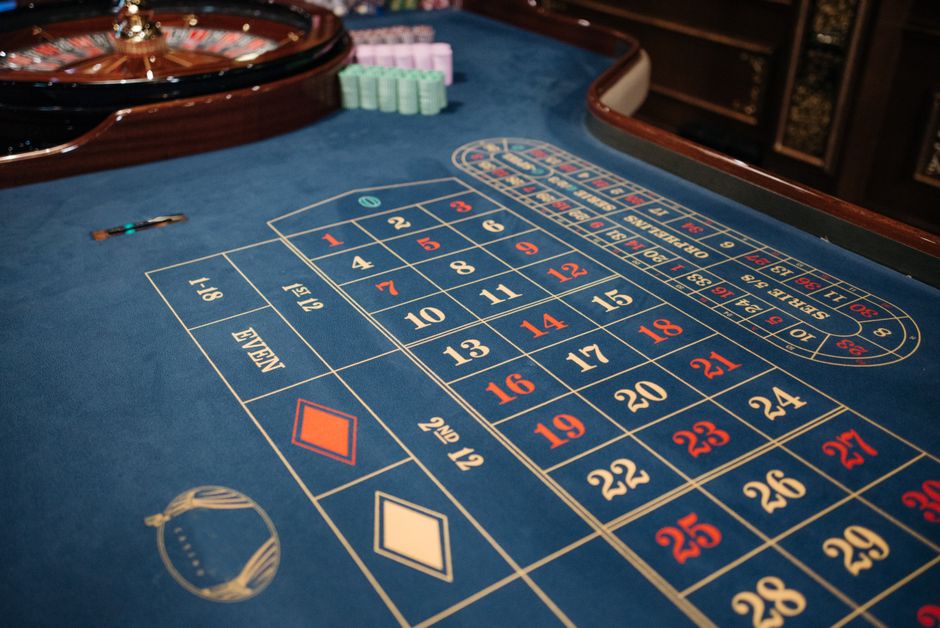
- European roulette: 97.3% (single zero)
- American roulette: 94.74% (the extra double zero costs you more than most people realize)
- Blackjack with basic strategy: 99.5% or better
- Video poker (Jacks or Better, perfect play): up to 99.5%
- Keno and scratch-style games: often 70% to 85%
Translation: if you want the slowest bleed, blackjack and video poker played correctly beat slots every single time. Slots are still the most popular because that 3% to 5% edge buys a lot of entertainment per hour. Just know the price tag.
Volatility: The Forgotten Half of the Equation
Two slots can both have 96% RTP and feel like completely different animals. That's variance, or volatility. High-volatility slots like Money Train or San Quentin hit rarely but can pay thousands of times your stake. Low-volatility slots pay small amounts frequently. Same RTP, opposite experiences.
This matters because your session length depends on it. A €200 bankroll on a high-volatility slot at €1 per spin might last fifty spins. On a low-volatility slot, it might last three hundred. Neither is better - but picking a game that matches your bankroll is.
A quick rule of thumb:
- Small bankroll, want to play a while? Low volatility.
- Small bankroll, want a shot at a big score? High volatility, but accept the almost-certain bust.
- Large bankroll, want steady grind? Medium volatility.
Streamers love high-volatility slots because big wins make big content. They rarely show the forty-minute dry spells before them. For a closer look, mahjong way 1 has helpful details.
Why the Bookmaker Always Has an Edge - And How to Shrink It
Sports betting works on the same principle, but it's transparent if you know where to look. The overround, also called the vig or juice, is the bookmaker's built-in margin. If a match is priced at 1.90 for both sides of a 50/50 market, the implied probabilities are 52.6% each, totaling 105.2%. That extra 5.2% is the book's margin.
Here's how to sharpen your betting:
- Convert odds to implied probability. Fractional odds of 1/2 mean 66.7%. Decimal odds of 3.00 mean 33.3%. Do the math before you bet.
- Shop lines. The difference between 1.90 and 1.95 on a €100 bet is €5 per wager. Over 200 bets a year, that's €1,000.
- Ignore accumulators for long-term value. Each leg multiplies the bookmaker's margin. A five-fold at 5% edge per leg becomes roughly 28% combined. That's not a lottery ticket - that's a donation.
- Specialize. Knowing one league, one division, or even one team's injury situation cold beats spreading yourself thin across every fixture on the coupon.
Betting markets with tight margins - the Asian handicap, major football leagues, big NBA games - are where sharp bettors live. Novelty markets and obscure leagues carry monster margins of 10% to 20% because the book knows its pricing is weaker and its customers less informed.
Poker Is the One Game Where You Beat Other People, Not the House
Poker is a different beast entirely. The house doesn't care if you win or lose - it just takes the rake. That means the edge doesn't come from beating an algorithm. It comes from beating the other players at your table. This is the only mainstream gambling format where long-term winners exist in meaningful numbers.
But the rake is still brutal at low stakes. A typical 5% rake capped at €3 in a €1/€2 no-limit hold'em game means you need to be significantly better than average just to break even. In tournament poker, the entry fee of €10 plus €1 juice means you start down 9% before a single card is dealt. That's why volume and skill development matter.
What separates winning poker players from losing ones, in rough order of impact:
- Position awareness - playing more hands from late position than early
- Bankroll discipline - having at least 20 buy-ins for cash games and 50 to 100 for tournaments
- Game selection - sitting at tables with weaker players is worth more than any advanced strategy
- Emotional control - tilt costs more hands than bad luck ever will
- Study time - solvers, hand reviews, and forums separate rec players from regs
That last point is uncomfortable for many. If you're not studying, you're the fish at the table, whether you realize it or not.
The Psychology Trap: Why Slot Designers Are Better Than You Think
Modern slot developers use near-miss animation, dynamic reel weighting, and carefully spaced bonus triggers to keep you spinning. Psychologists call the effect variable ratio reinforcement - the same mechanism that keeps people pulling a lever in a lab. It's not a conspiracy. It's design.
You can weaponize awareness, though. Set a time limit before you start spinning, not after you're down. Use the auto-spin feature sparingly. Skip the loss-chasing session after a bad sports bet. And never gamble to fix a bad mood - that's when the math gets truly expensive.
The Bottom Line
None of this is meant to scare you off. Gambling can be a genuinely entertaining form of spending, the same way a theme park ticket or a concert is. The trick is treating it like that - a cost, not an investment. Pick games with fair RTP, understand that volatility determines whether your evening lasts twenty minutes or three hours, shop your odds relentlessly, and if you're going to play poker, actually put in the study. Master those basics and you'll get more enjoyment from your bankroll than 90% of the people spinning next to you. The math never lies. The question is whether you're going to ignore it or use it.